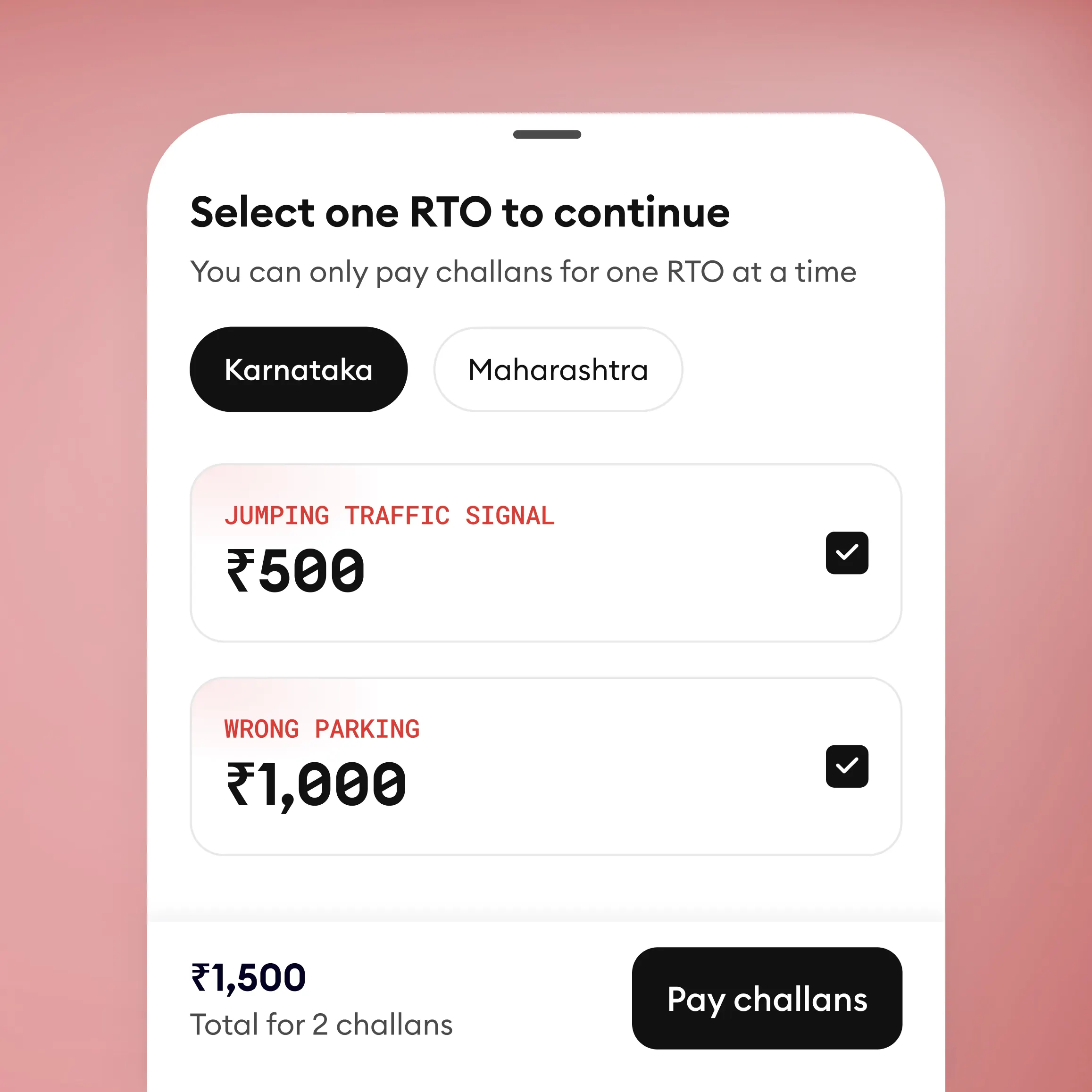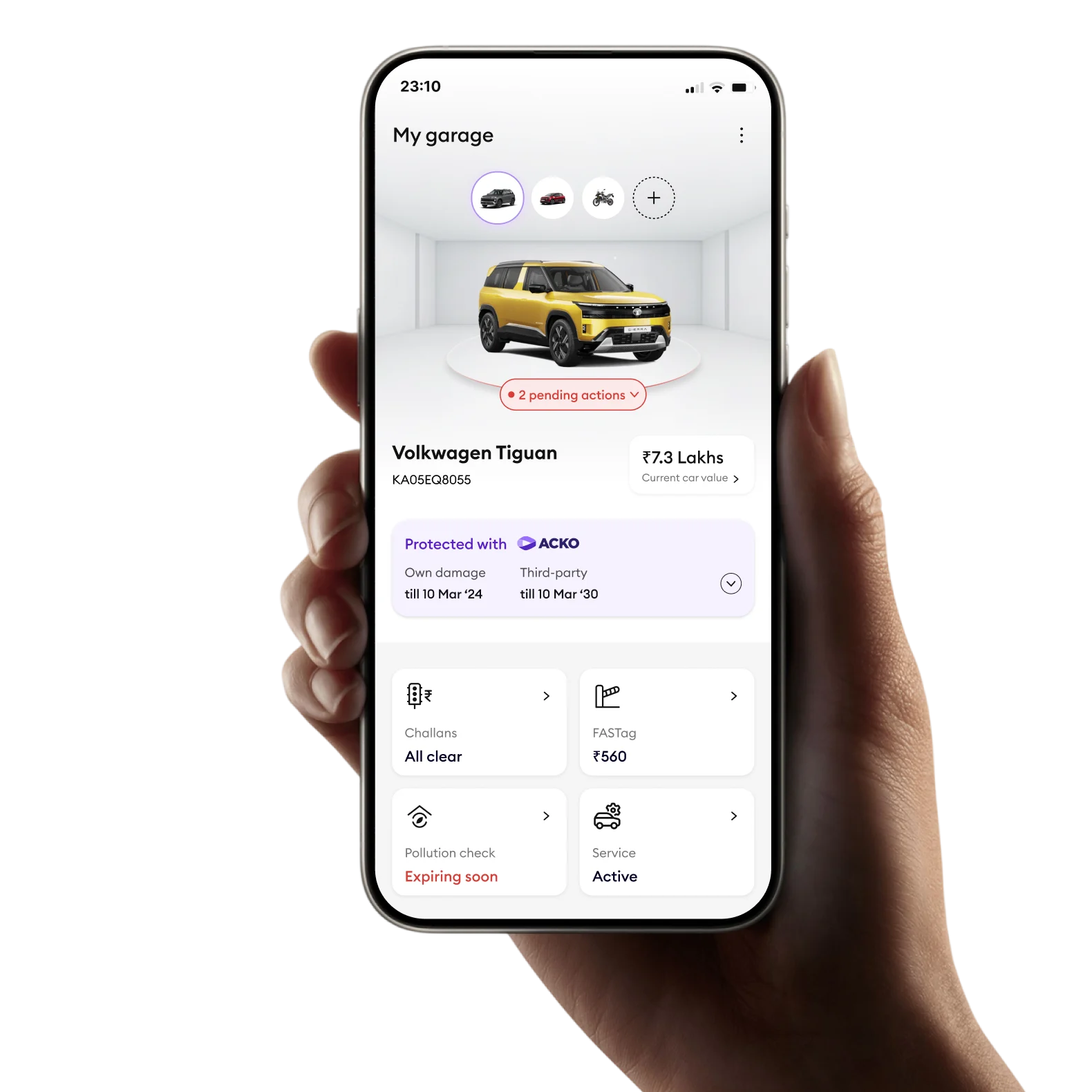
Transformed challan into a product-led growth feature driving 3M+ installs

Redesigned a utility flow into a scalable acquisition channel within the product experience

ACKO Traffic Challans
Summary

Led the end-to-end design of ACKO's traffic challan discovery and payment experience, turning a government utility into a consumer product that became the company's primary user acquisition channel.

I led consumer-backward design across fragmented RTO systems, defined interaction models, error states, and system feedback loops at scale, and partnered with engineering on UX-led trade-offs that reduced data costs by ~₹3 crore annually.

3M+
Annual app installs
Via web-to-app user journey
5M+
Active users
Engaging with challan checks
Higher retention
vs other acquisition cohorts
82%
Payment completion
Highly efficient payment funnel
Context & Opportunity

Traffic challan discovery and payment in India is fragmented across multiple state and central RTO systems, with no single trusted destination for vehicle owners. Third-party platforms have inconsistent data and unreliable payments, creating a trust deficit in a high-anxiety moment.

  • Fragmented systems: Multiple state & central RTO databases with no unified access for vehicle owners
  • High-anxiety moments: Users encounter challans during enforcement or unexpected SMS alerts, triggering stress
  • Trust deficit: Third-party platforms have inconsistent data & unreliable payment flows
ACKO'S CHALLENGE
Insurance is low-frequency
Limited reasons for users to return outside annual renewals or claims.
THE OPPORTUNITY
Challans are high-frequency
Vehicle-ownership adjacent with acquisition, engagement & retention potential.
For ACKO, this was an opportunity to evolve a utility into a core consumer product that could drive repeat usage and long-term value.
The bet we made

Before building, we articulated four strategic bets that would guide every design decision:

01
Reactive discovery is the primary entry point
Users would check challans reactively triggered by SMS alerts, traffic enforcement, or external nudges—not proactively.
→ Design for high-intent, anxious moments
02
Trust matters more than speed
In a government-linked payment flow, trust, verification, and clarity would matter more than speed or visual delight.
→ Optimize for authority & reassurance
03
Reliability enables conversion
Users would only pay via ACKO if the experience felt authoritative, predictable, and reliable at scale.
→ System transparency over polish
04
Utility can become a growth engine
If designed well, challans could become a repeat-use engagement loop and sustainable acquisition surface.
→ Design for retention, not just transaction
Design approach

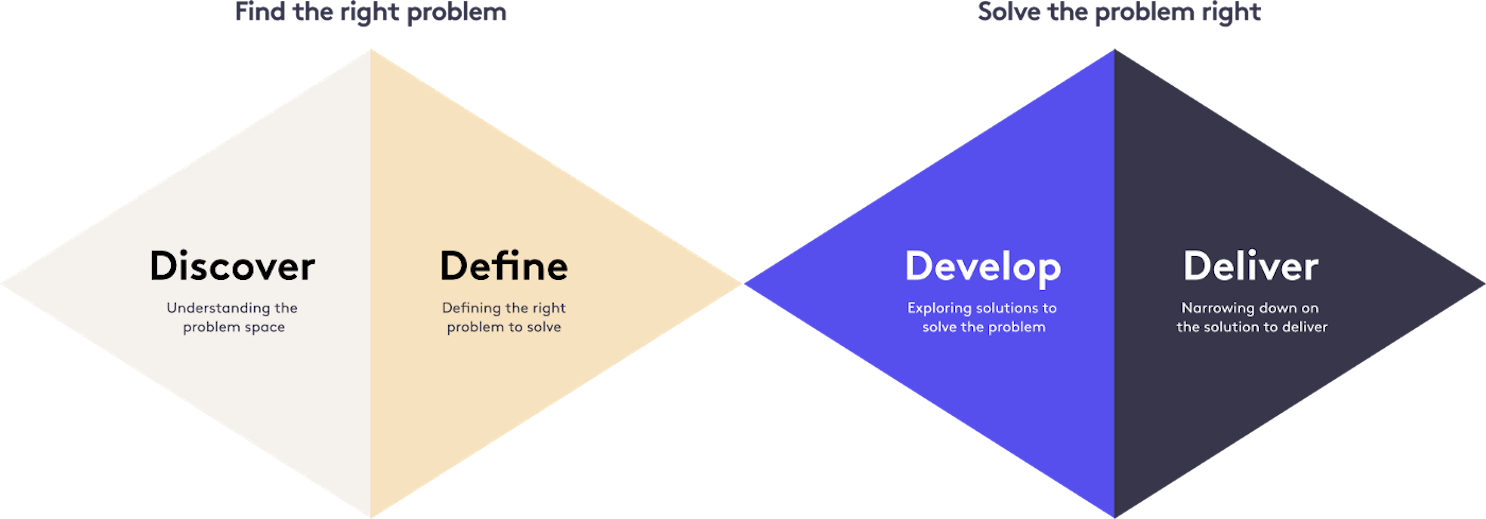
We designed the challans experience as a platform-level consumer system, using two frameworks to guide decisions: Know-Feel-Do for interaction design and Double Diamond approach to manage complexity across discovery, verification, and payment.
Know-Feel-Do as a design lens
Know
Users needed complete and trustworthy challan information - vehicle details, issuing RTO, offence, amount, and data source - to confidently verify accuracy.
Feel
The experience needed to reduce anxiety caused by penalties, data mismatches, and payment failure. We optimised for authority, reassurance, and system transparency.
Do
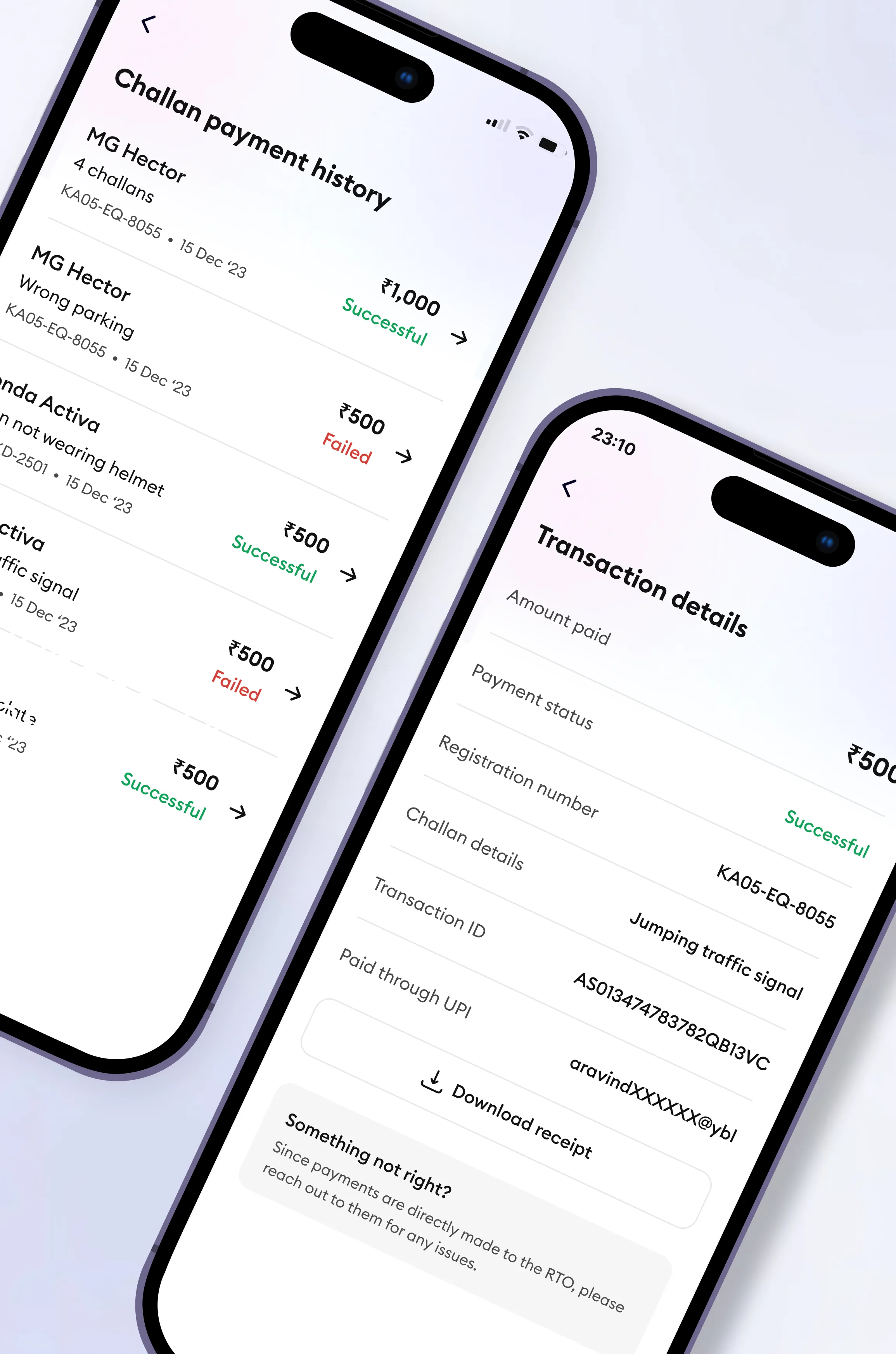
Only after confidence was established did we encourage action, guiding users from check → verify → pay with explicit confirmations and feedback loops.
Designing through convergence
Double Diamond framework diagram
Explore
Explored multiple entry points - web search, reminders, in-app,and mental models for challan discovery.
Define
Identified verification—not payment as the critical trust-building moment and centred the experience around it.
Design
Designed flexible UX patterns to handle state-wise RTO inconsistencies, partial data, and latency.
Deliver
Landed on a verification-first, progressive disclosure flow with defined error states and recovery paths.
Key system-level design decisions
  • Consumer-backward design:
    Led design across fragmented RTO systems, balancing regulatory constraints, data latency, and payment reliability.
    → Seamless user experience across fragmented RTO systems
  • Scalable interaction models:
    Defined error states and system feedback loops that scaled reliably across millions of challan checks.
    → Achieved seamless scalability for 5M+ yearly users
  • UX-led cost optimisation:
    Partnered with engineering on smart caching, on-demand fetches, and trade-offs to reduce data costs.
    → Reduced annual data costs by ~₹3 crore
Final designs

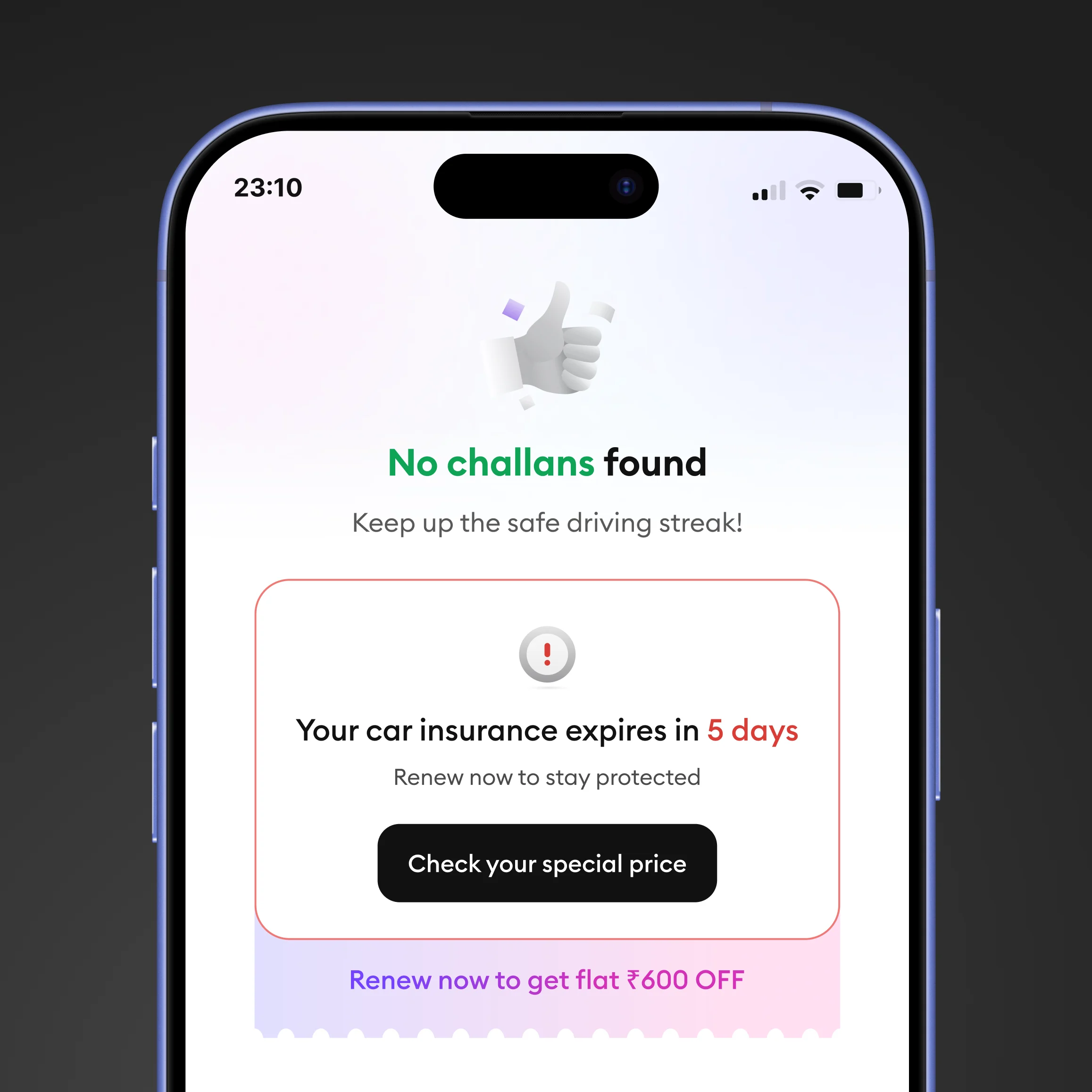
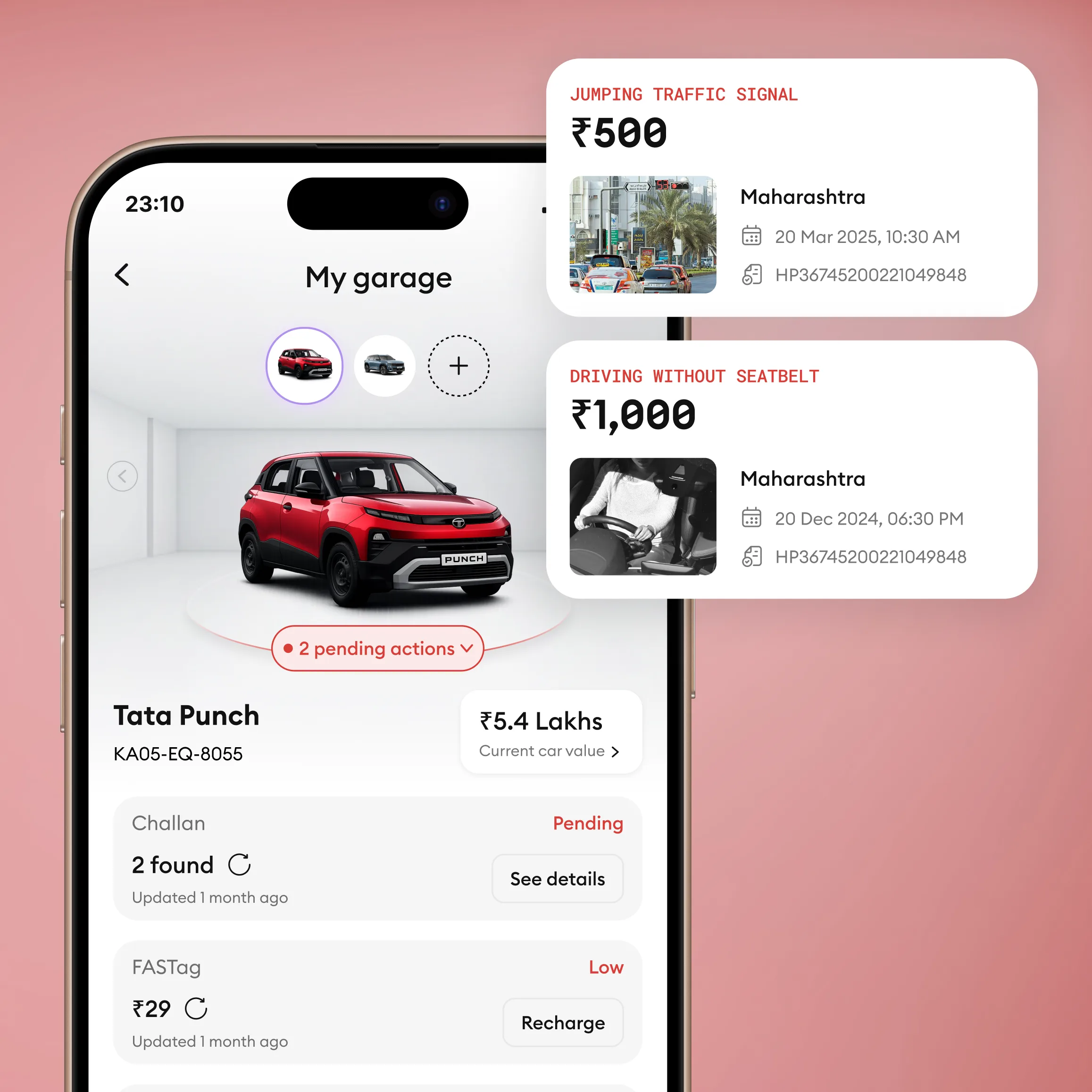
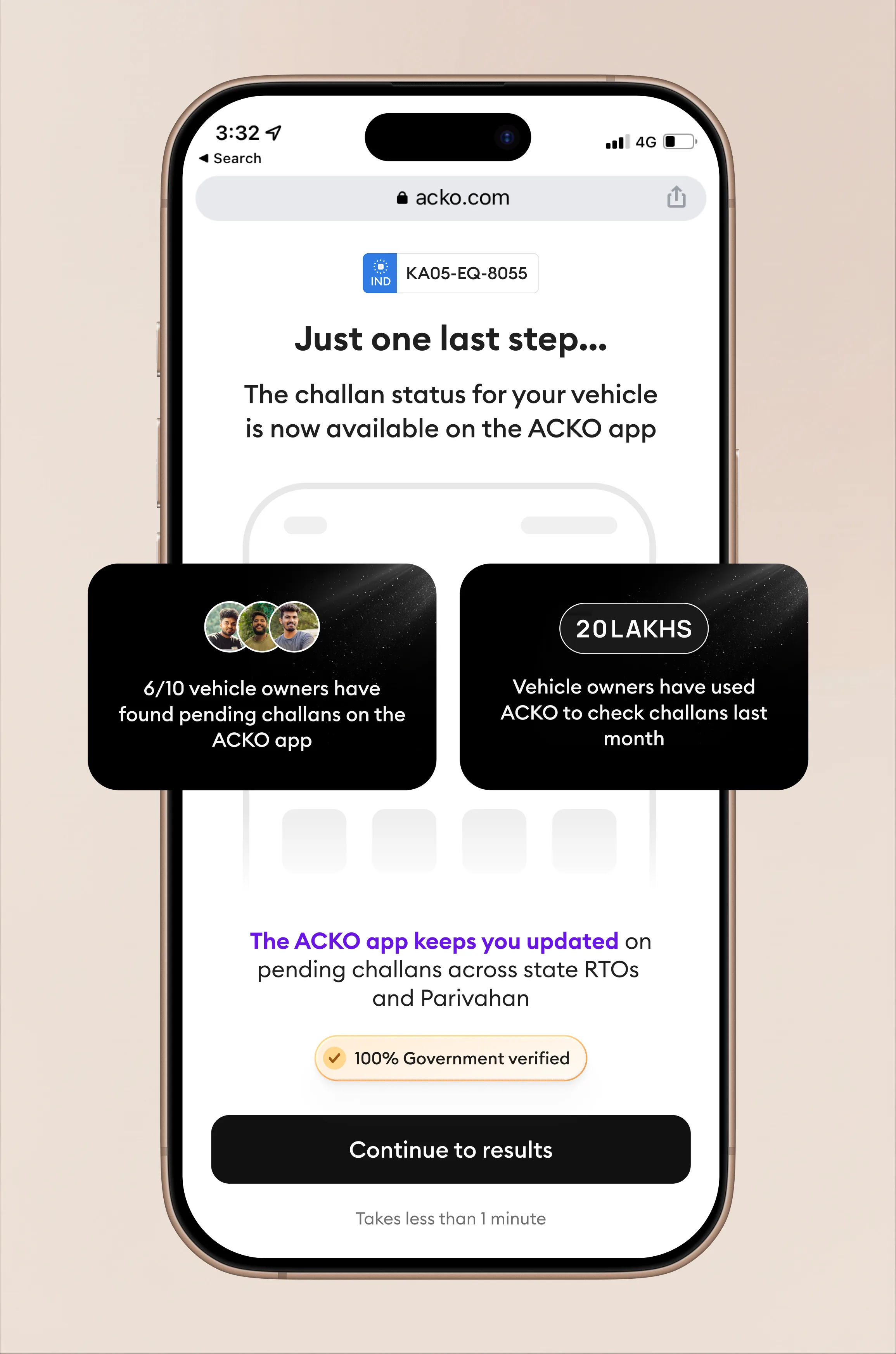
With insights from the framework sessions, style guide, and design system, I moved on to designing and prototyping the full challan experience across web and app.
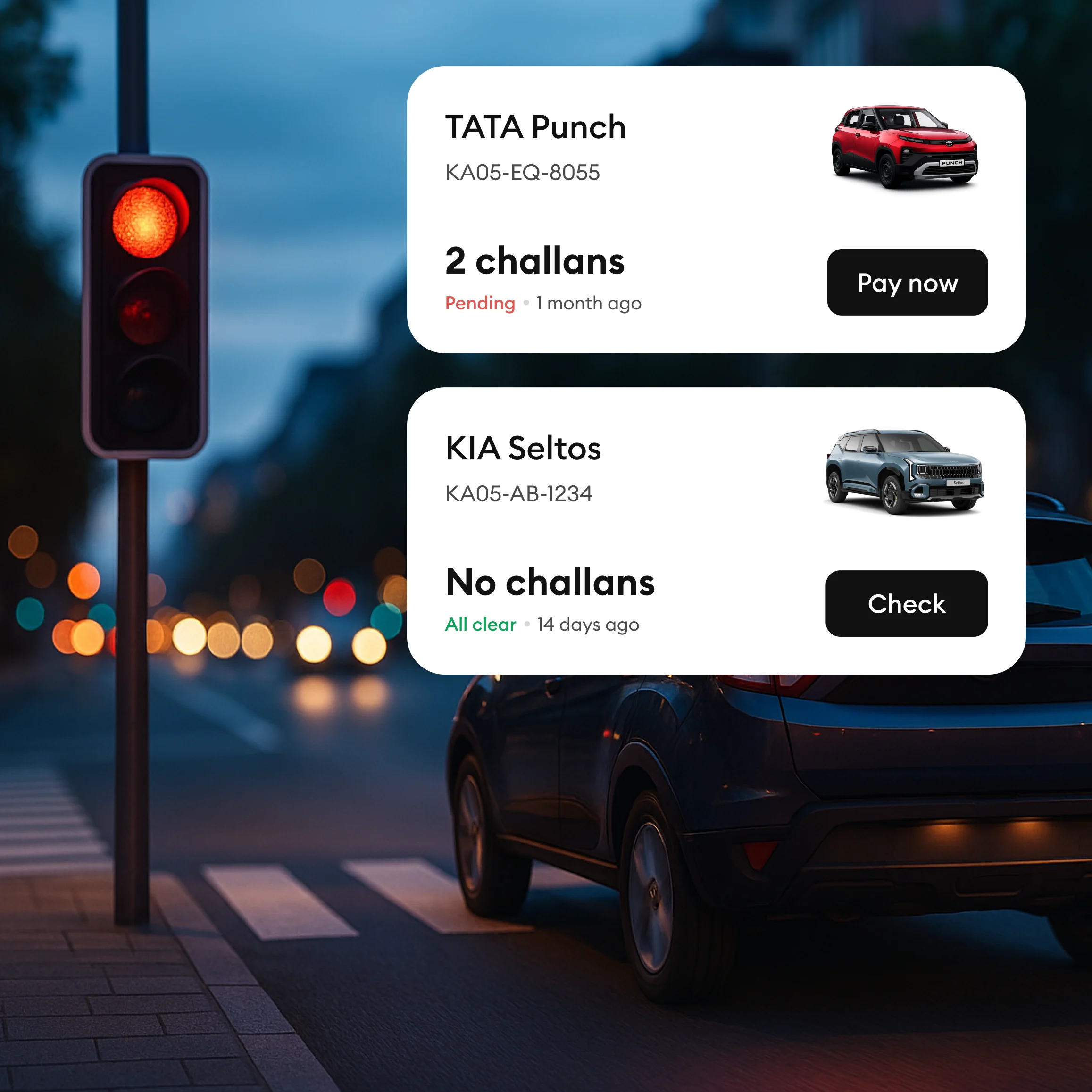
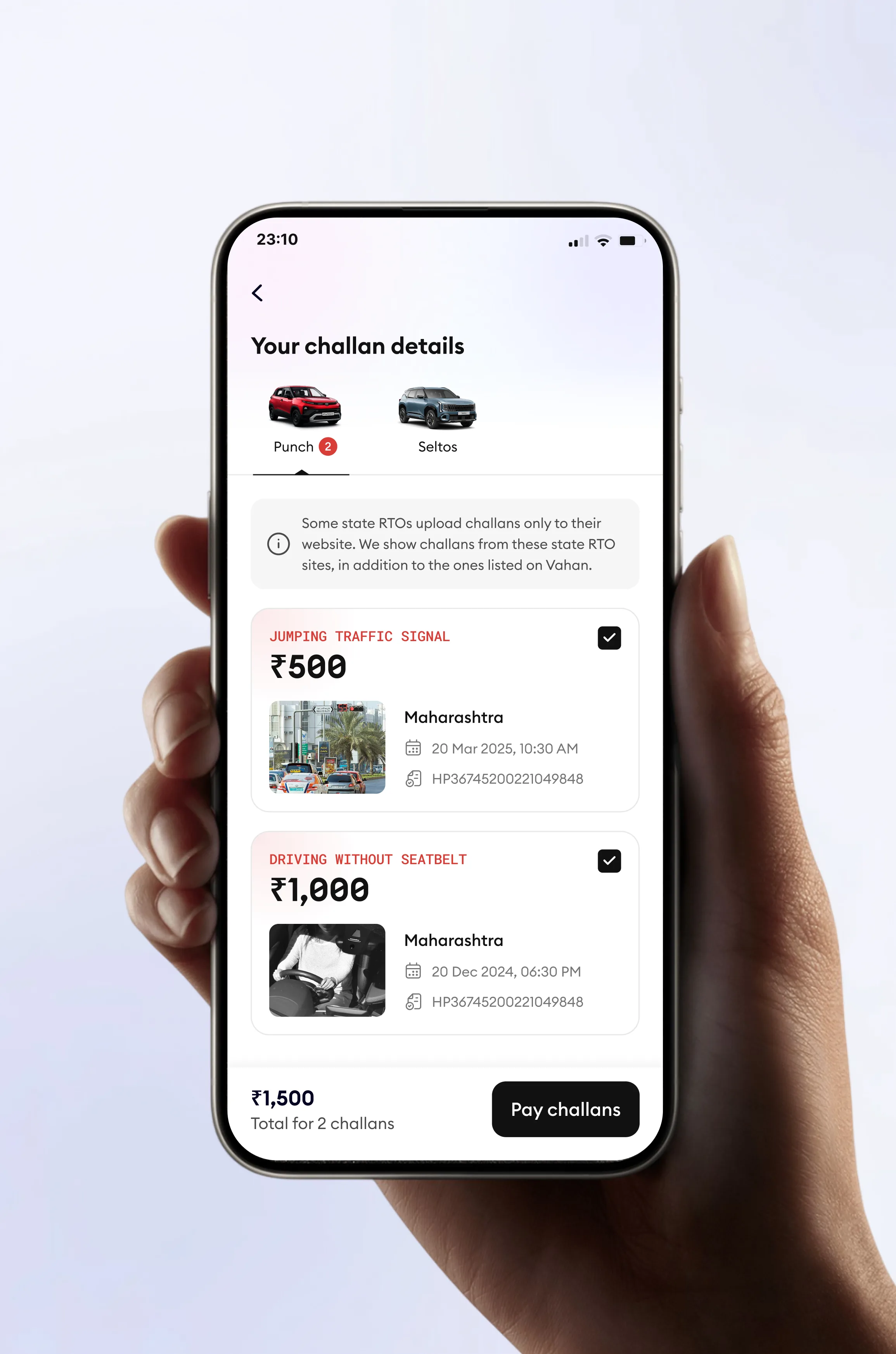
Search-led web journeys help users check challans quickly and convert with confidence.
Impact

The challan experience became ACKO's primary acquisition and engagement surface. ~4% of users pay challans every month, demonstrating the kind of repeat engagement insurance alone could never achieve.

3M+
Annual app installs
Via web-to-app user journey
5M+
Active users
Engaging with challan checks
Higher retention
vs other acquisition cohorts
82%
Payment completion
Highly efficient payment funnel
Key Learning
"At scale, trust is not a moment—it's a system. Reliability, transparency, and recoverability matter more than speed."
How it evolved

The challan experience evolved from a utility feature into a platform-level consumer product spanning acquisition, engagement, payments, and cost efficiency.

01
Designing for repeat behaviour
Refined confirmation states, confidence cues, and failure recovery flows to reduce uncertainty and strengthen trust across high-intent payment journeys.
→ Drive consistent repeat usage at scale
02
Building resilience into the system
Reworked system and interaction models to support rising traffic, state-level variation, and cost constraints without compromising user experience.
→ Scale complexity without degrading experience
03
From feature to platform
Transformed Challans from a transactional utility into a consumer platform spanning acquisition, engagement, payments, and cost efficiency.
→ Transition from single workflow to full-stack consumer ecosystem
Final Takeaway
"Designing for scale means owning outcomes across user trust, business growth, and system economics - not just interfaces."
Other key projects